25/04/2020

Designing Clinical AAC Tablet Applications with Adults who have Mild Intellectual Disabilities

Ryan Gibson, Mark Dunlop, Matt-Mouley Bouamrane, Revathy Nayar

Keywords: intellectual disabilities, primary health care, augmentative and alternative communication, accessibility, mobile applications

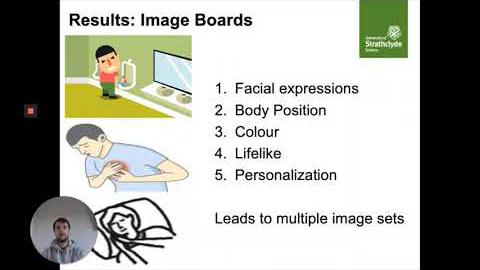
Abstract: Patients with mild intellectual disabilities (ID) face significant communication barriers within primary care services. This has a detrimental effect on the quality of treatment being provided, meaning the consultation process could benefit from augmentative and alternative communication (AAC) technologies. However, little research has been conducted in this area beyond that of paper-based aids. We address this by extracting design requirements for a clinical AAC tablet application from n=10 adults with mild ID. Our results show that such technologies can promote communication between general practitioners (GPs) and patients with mild ID by extracting symptoms in advance of the consultation via an accessible questionnaire. These symptoms act as a referent and assist in raising the awareness of conditions commonly overlooked by GPs. Furthermore, the application can support people with ID in identifying and accessing healthcare services. Finally, the participants identified 6 key factors that affect the clarity of medical images.

The video of this talk cannot be embedded. You can watch it here:
https://www.youtube.com/watch?v=qytveQwdvfk
(Link will open in new window)
 0
 0
 0
 0
This is an embedded video. Talk and the respective paper are published at CHI 2020 virtual conference. If you are one of the authors of the paper and want to manage your upload, see the question "My papertalk has been externally embedded..." in the FAQ section.

Comments

Post Comment
no comments yet
code of conduct: tbd

Similar Papers