25/04/2020

Companionship Is Not a Function: The Effect of a Novel Robotic Object on Healthy Older Adults' Feelings of "Being-Seen"

Oren Zuckerman, Dina Walker, Andrey Grishko, Tal Moran, Chen Levy, Barak Lisak, Iddo Wald, Hadas Erel

Keywords: older adults, successful aging, tangible interaction, loneliness, acceptance, social-interaction, non-humanoid robot

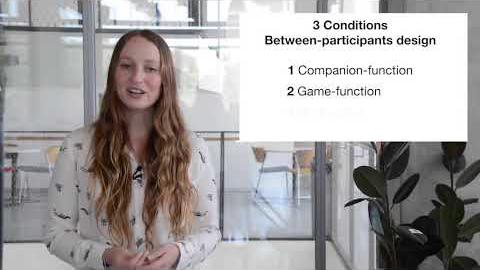
Abstract: One of the challenges faced by healthy older adults is experiencing feelings of not "being-seen". Companion robots, commonly designed with zoomorphic or humanoid appearance show success among clinical older adults, but healthy older adults find them degrading. We present the design and implementation of a novel non-humanoid robot. The robot’s primary function is a cognitive word game. Social interaction is conveyed as a secondary function, using non-verbal gestures, inspired by dancers’ movement. In a lab study, 39 healthy older adults interacted with the prototype in 3 conditions: Companion-Function; Game-Function; and No-Function. Results show the non-verbal gestures were associated with feelings of "being-seen", and willingness to accept the robot into their home was influenced by its function, with game significantly higher than companion. We conclude that robot designers should further explore the potential of non-humanoid robots as a new class of companion robots, with a primary function that is not companionship.

The video of this talk cannot be embedded. You can watch it here:
https://www.youtube.com/watch?v=GIBCs8jmywI
(Link will open in new window)
 0
 0
 0
 0
This is an embedded video. Talk and the respective paper are published at CHI 2020 virtual conference. If you are one of the authors of the paper and want to manage your upload, see the question "My papertalk has been externally embedded..." in the FAQ section.

Comments

Post Comment
no comments yet
code of conduct: tbd

Similar Papers